Solo show | Carlton Savoy Complex | ZAHORIAN & VAN ESPEN Gallery | Bratislava, Slovak Republic | 2026
Curatorial statement
The exhibition Ocean Falls From the Sky at Zahorian & Van Espen presents the latest work of Sara Zahorjanová (1991), a graduate of the Academy of Fine Arts in Prague (2018), who lives and works between Paris and Prešov. She continues her program of energetic yet meditative painting, as well as the creation of diary-like records that take on an object- based form. Through them, she searches for the proverbial—yet always relative—balance of opposites: the relationship between personal, emotional, intimate experience (the diaries) and the supra-personal, universal experience of reality (painting); between intuition, the spontaneity of gesture, and rational thought. She creates “on the edge of presence and transience,” while poems she writes and visualizes play an important role in her distinctive pictorial world.
Two years after her last solo exhibition, she arrives with new works included in the present collection in Bratislava. She continues along the two main trajectories of her practice. The first remains painting; compared to the previous period, however, the painterly force and contrast-filled energy radiating from her large-scale compositions have partially calmed and softened. The struggle once waged on her canvases between individual formations, entangled paths, and lines in black-and-white tonalities has quieted, turning more inward. The sophisticated play of forms seems, at every moment, to be adjusted not only by reason but above all by feeling and intuition, followed by gesture, and their organic tension moves toward mutual balancing — the equilibrium of forces. She models the surface and its structure painterly: at times through the stroke and touch of the brush, at others by spraying paint, layering various techniques and approaches to create the illusion of space and depth. The artist strives to reduce narrative elements to a minimum in order to achieve the purest possible visual composition. Her painting has never been a priori “feminine,” yet something of her distinctive ability to contemplatively sense the surrounding world has now naturally imprinted itself upon it. She draws on universal, historical, and natural references — symbols and signs flowing from our experience and imagination, yet reaching somewhere beyond them. The result is a kind of imaginary landscape — “semi-surreal” spaces pulsating with their own autonomous life. As she herself notes, the essence of her painting is the effort to materialize and express that imagined (precarious) movement — a touch at the boundary that is part of our lives, for “even the slightest touch can keep one stone balanced upon another. External influence, however, can very easily disrupt this fragile stability…”
The second trajectory is the creation of intimate objects, image-objects, and assemblages. These are quiet, sensitive, and at times deeply wistful diary entries that allow us to glimpse the artist’s inner world. While in painting she attempts to “objectify” her view of the world and seek a certain timelessness, in the objects she is profoundly personal and subjective—and does not conceal it. She creates them by hand: sewing, embroidering, assembling found objects, old frames, beads, pieces of glass, and semi-precious stones — each a memory of people, situations, perceptions, or significant moments in life. She often encloses them in nets, hiding them beneath veils so that the mnemonic trace of memory may endure. They continue her painterly conception, demonstrating her ability to think and work painterly even with object-based means, in this case primarily textiles. By layering fabrics of varying structures, textures, degrees of transparency, sheen, and matte qualities (batiste, satin, tulle, velvet, combed wool yarn, threads), she achieves a spatial painterly effect very similar to that seen in her paintings.
Sara Zahorjanová approaches lived reality — which today tests us all— with poetic distance, searching for the purest painterly metaphor, a way to name and internally come to terms with the present—an off-balance world of shaken values and uncertainties accompanying our civilization and marking our everyday lives. Through them, she seeks not only general certainties but her own inner ones. As she wrote about her current work: “I connect the illusion of surface in painting with geometric shapes and elements, their interconnections on the canvas. Phenomena and scenes that we can see with our own eyes are our earthly conjunctions. The gaze, like a fiery Moon, travels through the view between the Doric columns of the Parthenon, or in the evening settles on the roof of a museum in the city center, touches the tip of a church tower or the peak of a gable. It is also us. Our approaches toward one another, mutual understandings, reconciliations, and physical encounters when we move toward each other. Much is revealed to us, yet much never will be and will remain hidden behind the veil of night, the sea’s surface, another continent, a wall of dense rain, a waterfall, the walls of our rooms, or the fog that has decided to settle in our lowland.” Ocean Falls From the Sky in order to reveal what is invisible…
/ Katarína Bajcurová, 2026
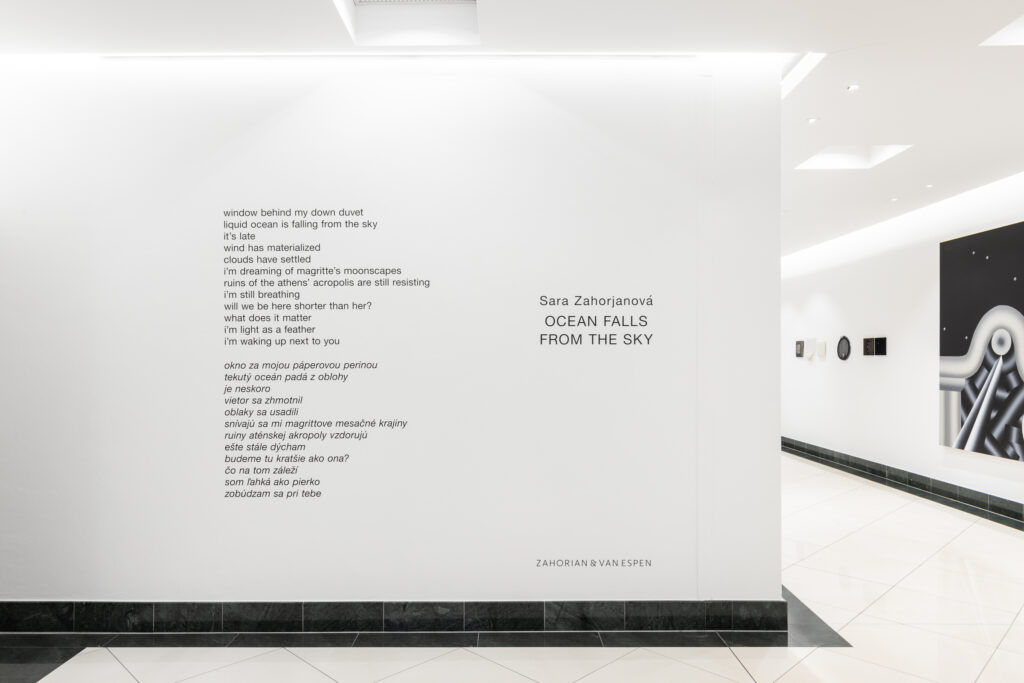
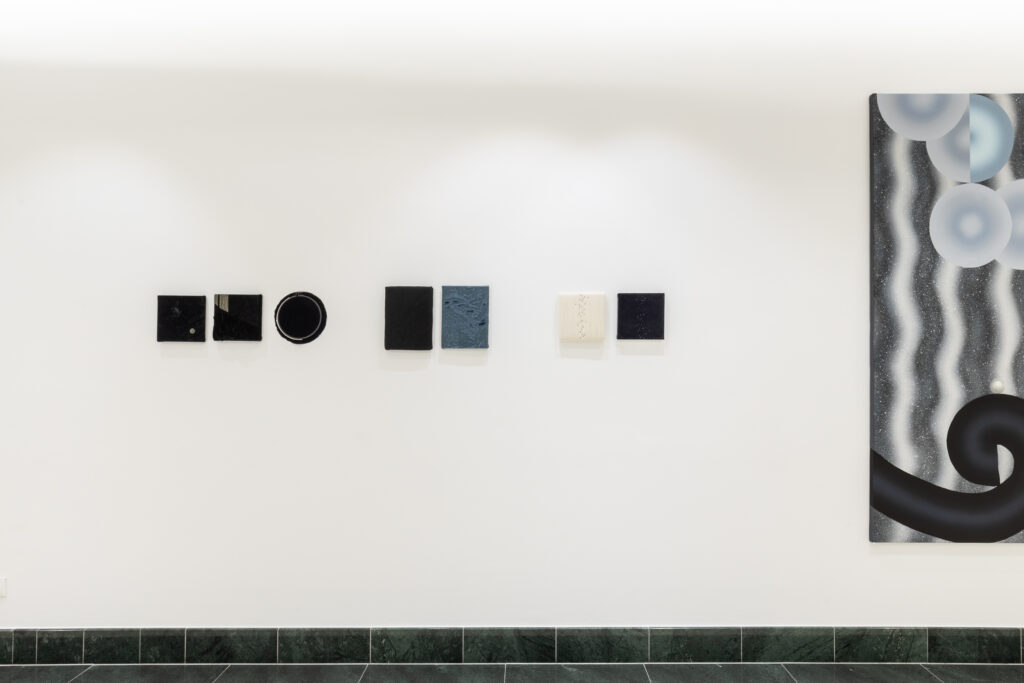
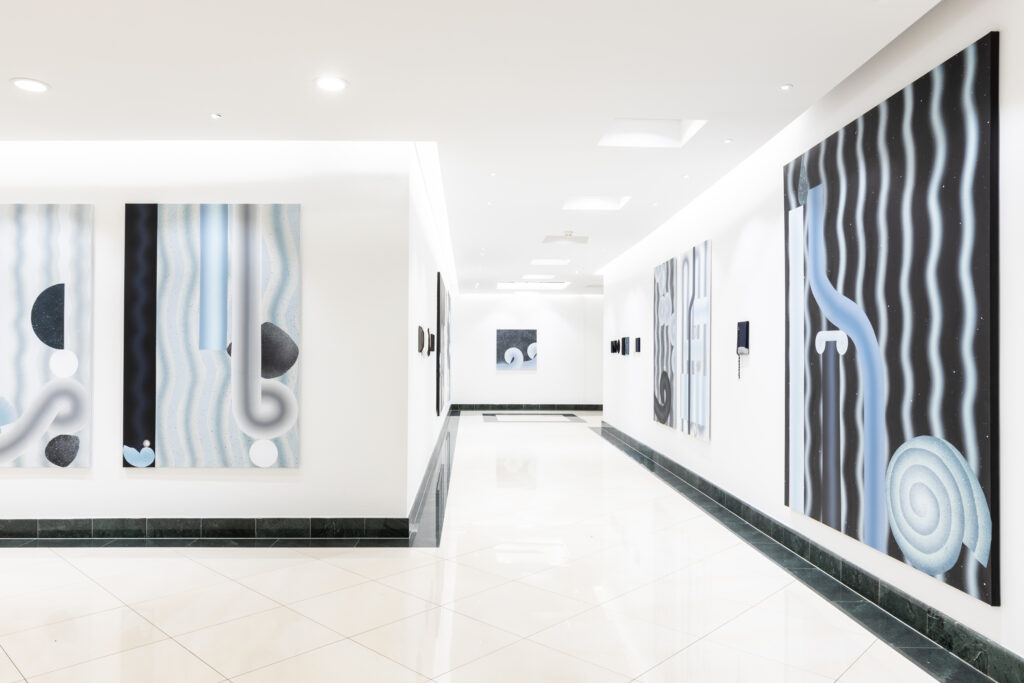
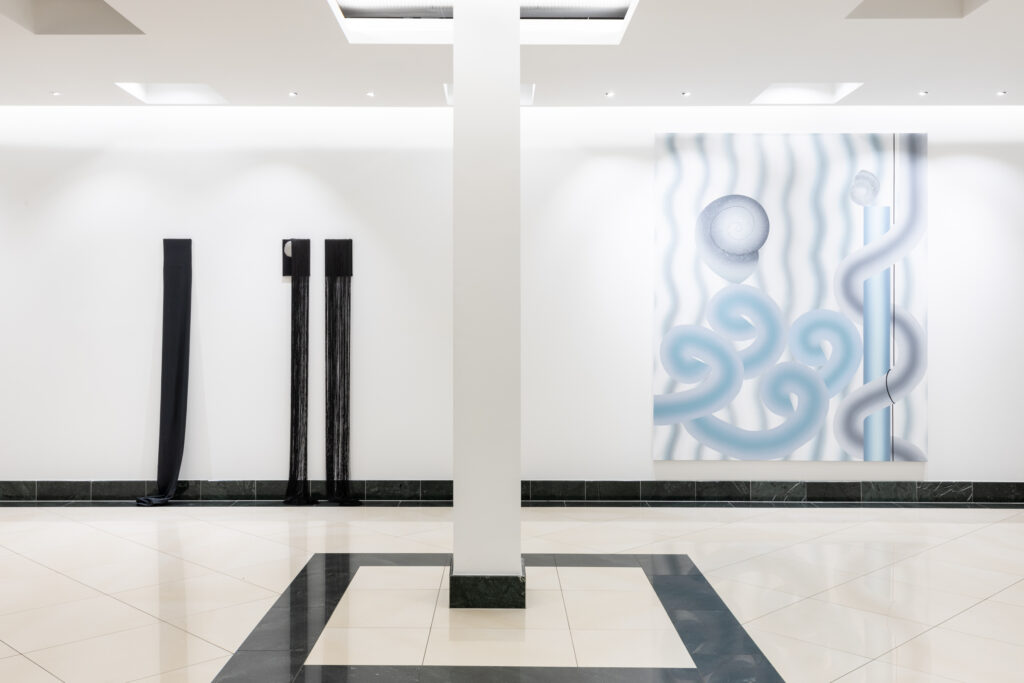
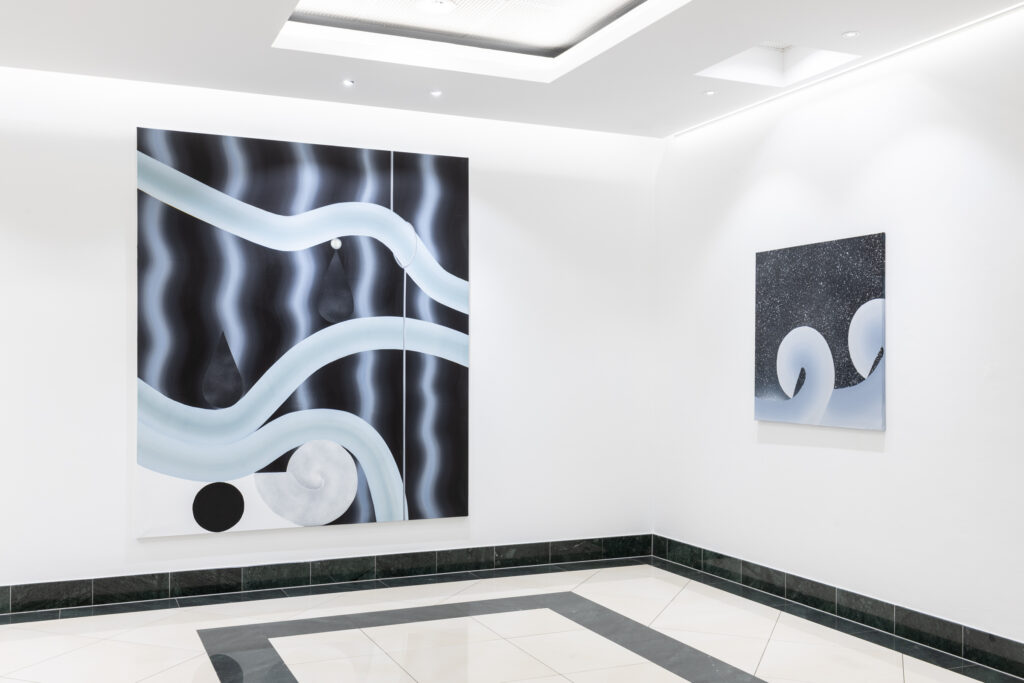
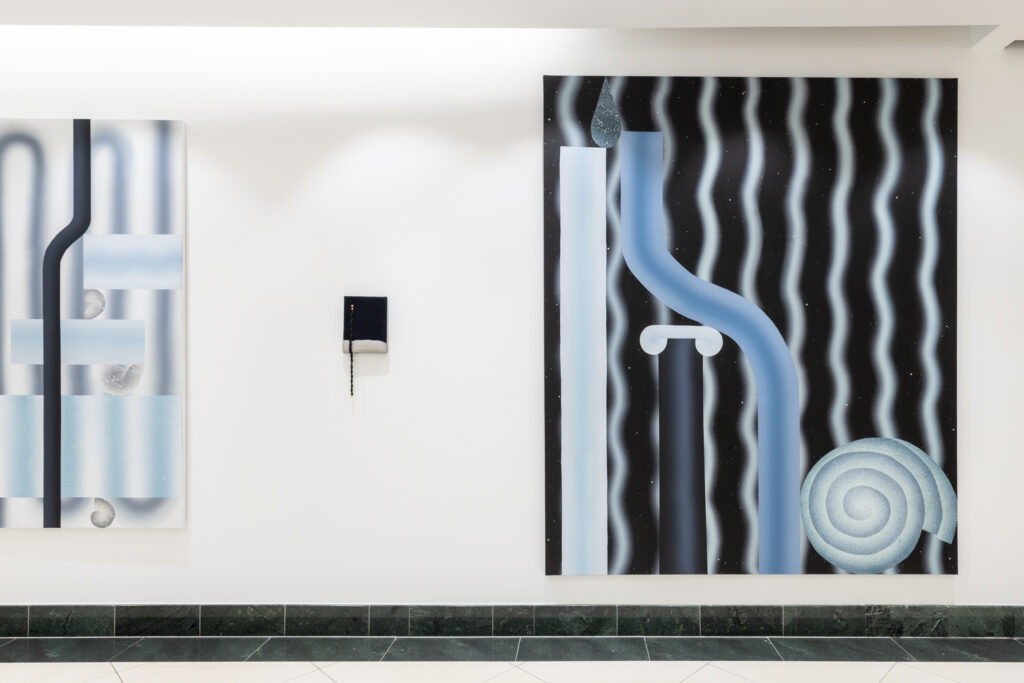
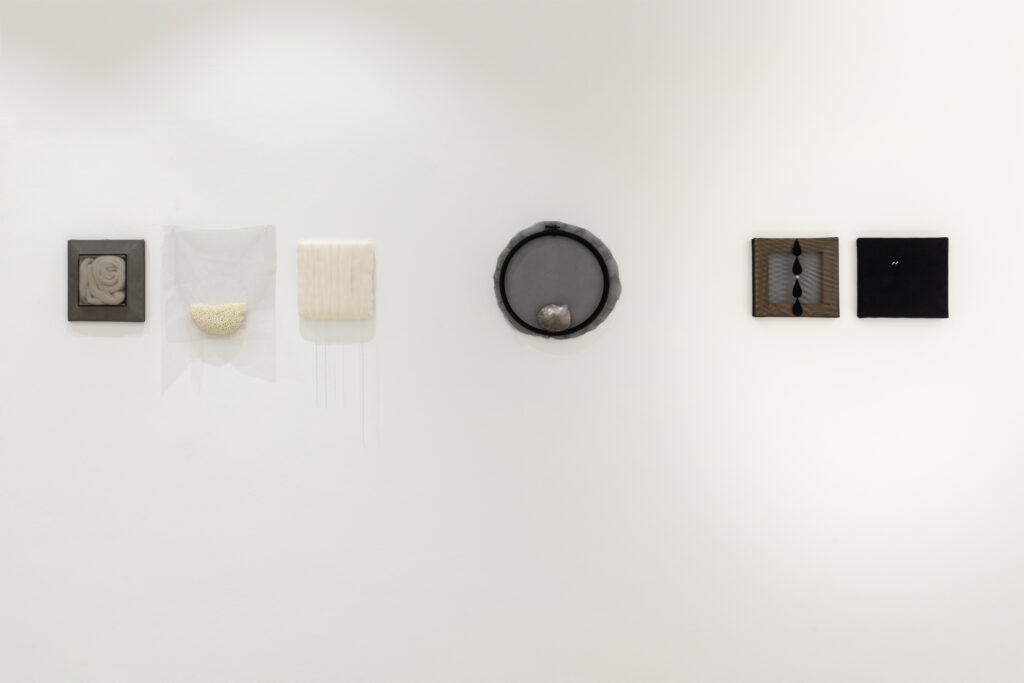
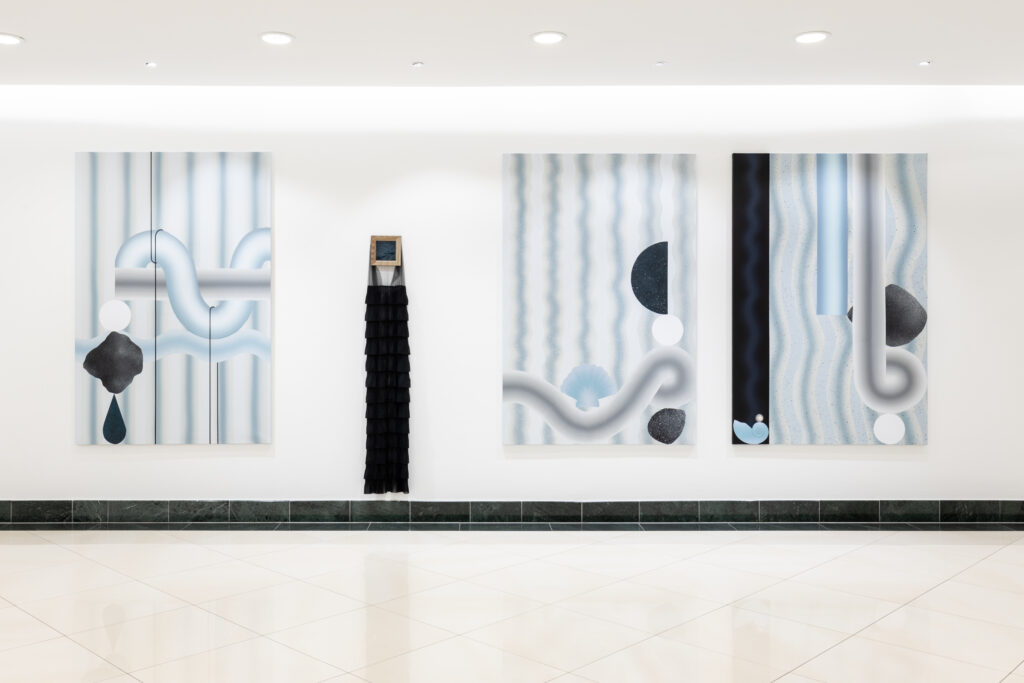
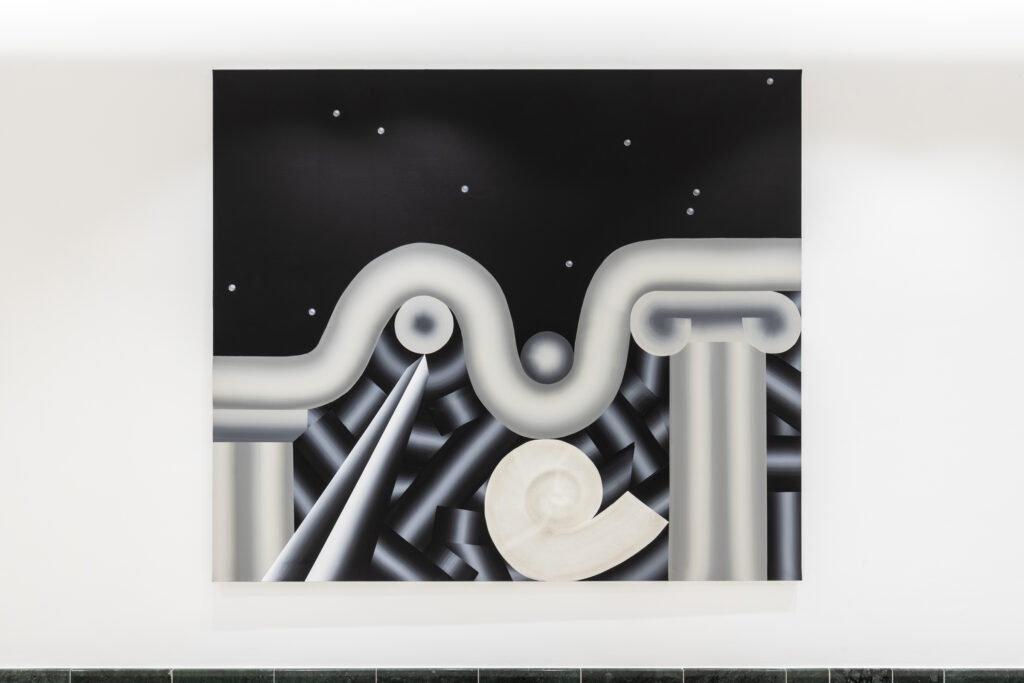
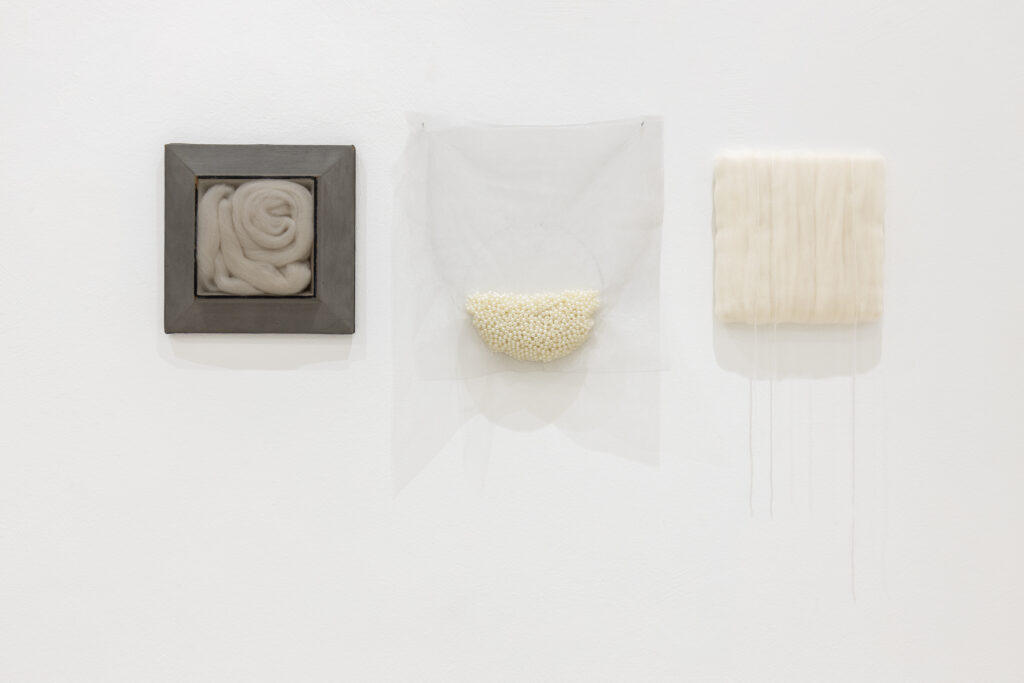
photo credit Leontína Berková